
The Individual tax payer exemption limit to be raised to Rs 200,000 from Rs 180,000.
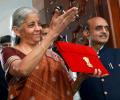
At the customary post-Budget media interactions, Finance Minister Nirmala Sitharaman and her topmost bureaucrats touched upon a number of issues. The minister said the government taxing income from digital virtual assets did not give them legitimacy and that issue was being dealt separately in the planned cryptocurrency Bill. She also expressed confidence that the Budget targets were achievable.

First things first: For those wondering if they need to reapply, the answer is no.

Driven by smartphone, electronics exports have reached $22.5 billion in value in the first eight months of the current financial year (FY25), a near 28 per cent growth over the $17.66 billion electronics exports during the corresponding period of FY24.
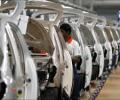
According to FADA, automobile retail trade and service industry comprises a network of 9,500 automobile dealers and their service stations engaged in sale, service/repair and spares of vehicles across segments, is an essential link in automotive business and a significant stakeholder.

General Budget is a terminology earlier used to differentiate between the Union Budget with the Railway Budget. Full-fledged budgets are titled "Union Budget", while interim Budgets are titled just that.

Here are the key numbers to watch out for in the Budget for 2022-23, which is widely expected to boost spending towards policies that create jobs, boost manufacturing, helping rural and agri-economy and infrastructure creation. Sitharaman, who had in her first budget in 2019 replaced leather briefcase -- which had been in use for decades for carrying budget documents -- with a traditional red cloth 'bahi-khata', has spurt in tax collections to her aid in the budget that is expected to a spend-all budget.

The platform recorded a peak rate of 917 filings per second on July 17 and 9,367 filings per minute on July 31.

Union Finance Minister Nirmala Sitharaman on Tuesday said the fiscal deficit for 2024-25 is estimated at 4.9 per cent of GDP.
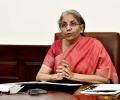
India Inc on Thursday pitched for continuation of reforms while ensuring tax and policy stability in the forthcoming Budget to prop up the economy hit hard by the COVID-19 pandemic. In the virtual pre-Budget consultation held with Finance Minister Nirmala Sitharaman, industry chambers said that government measures will help firmly entrench the nascent signs of recovery being currently seen in private investment. Capital expenditure by the government through enhanced infrastructure spending should in the meantime continue to support growth, CII president TV Narendran said.
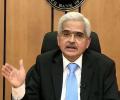
Reserve Bank Governor Shaktikanta Das on Tuesday said the fiscal-monetary coordination was at its best during the last six years even as he thanked Prime Minister Narendra Modi for giving the opportunity to head the monetary authority of the country. Das, in a series of posts on X, on his last day of his six-year term as RBI Governor, also thanked the Finance Minister, various stakeholders and his colleagues at the central bank.

In his maiden Budget presented in Parliament on July 10, Finance Minister Arun Jaitley has tried to provide relief to the middle class by increasing tax exemption limit by Rs 50,000 to Rs 250,000.

The ruling Bharatiya Janata Party in poll-bound Karnataka on Friday sought to woo farmers, women and younger generation with a slew of welfare measures in its last budget in the current term, also earmarking Rs 1000 crore towards development and renovation of various temples and maths in the state.
The Individual tax payer exemption limit to be raised to Rs 200,000 from Rs 180,000.
Tax payers will be looking forward to some relief from Finance Minister Pranab Mukherjee who is expected to raise the income tax exemption limit to at least Rs 2 lakh in his budget proposals.
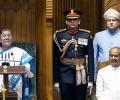
President Droupadi Murmu addressed both Houses of Parliament, highlighting the government's achievements in various sectors, including economic growth, social welfare, and infrastructure development. She emphasized the government's efforts to lift the economy out of "policy paralysis" and create a more inclusive society. Murmu also acknowledged the challenges posed by digital fraud and cybercrime and stressed the need for a social infrastructure revolution. The President's speech is considered a policy statement, outlining the government's vision and roadmap for the future.

The Direct Taxes Code 2009 is now on the back burner. The Union finance ministry has veered round to the view that its bold move to reform direct taxes should be subjected to further scrutiny. Contrary to earlier expectations, therefore, the Direct Taxes Code 2009 will not be presented to Parliament as a Bill along with the Union Budget for 20010-11on February 26.

A sharp rise can be attributed to the significant changes in India's share buyback tax regime, which will come into effect from October 1, 2024.

The panel's recommendations will be aimed at making a predictable and non-adversarial tax regime in the economy.

'The robust tax collections give the finance minister a fair amount of headroom for an expansionary fiscal policy.'

A vast majority of the business leaders believe that the Production Linked Incentive (PLI) schemes have been beneficial and expect an extension to other sectors in the coming years, a Deloitte Survey said on Friday. An overwhelming number of survey respondents hope the budget will fuel growth across industries by building strong domestic demand and focussing on capital expenditure and believe that it would define the 'Amrit Kaal'. "Critical to this growth will be the pace of capital expenditure, infrastructure development, and the need to boost infrastructure financing through private partnership. 60 per cent of respondents suggested raising funds through Indian Government Bonds," the survey said.

"There has been a 0.05 percentage points decline in the share of allocation for child budget to the Union Budget from 2.35 per cent (2022-23 BE) to 2.30 per cent (2023-24 BE).

Announcing a Re 1 crop insurance scheme for farmers, the deputy CM said the government will bear the financial burden of Rs 3,312 crore.

Pharma body wants all excisable goods used for R&D purposes should be exempted from central excise duty.
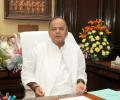
Finance Minister Arun Jaitley is likely to slash corporate tax rate by about one per cent and may put an end date for certain exemptions availed by the industry.

Finance Minister Pranab Mukherjee is slated to present the Budget on February 26.
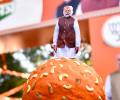
Delhi faces a severe financial crunch and the deficit is largely due to numerous welfare schemes without adequate revenue flowing in. The success of welfare schemes and electoral promises will need careful financial planning and out of the box thinking to whip up additional revenue, notes Ramesh Menon.

FM proposed rationalisation of various tax exemptions.

The FMCG industry hopes for a revival in consumption growth in 2025 with some 'green shoots' already visible, after having a challenging year amid escalating input costs and a double-digit rise in food inflation, which ultimately slowed down the pace of the urban market growth in the second half of 2024. Soaring prices of commodities such as palm oil, coffee, cocoa and wheat forced FMCG players to go for a hike of 3 to 5 per cent or resort to shrinkflation by reducing pack sizes and grammage to retain attractive price points, fearing a volume loss.
P Chidambaram has unveiled a bigger-than-expected outlay for the coming fiscal year.
Finance Minister P Chidambaram on Tuesday said the budget has attempted to clean up the tax regime and aims at spurring investment and implementing the goals outlined in government's National Common Minimum Programme.

The finance minister clarified that indexation benefits offered until April 1, 2001 would be protected. This means older properties, including legacy assets, would benefit.
Two months ahead of the Budget for 2005-06, Finance Minister P Chidambaram on Monday promised to make tax structure simpler for petroleum, telecom, sugar and textiles sectors.

"An important aspect of this budget is the welfare of the poor," Modi said.

'It would be reasonable to assume that Modi 3.0 would be more focused on projects and schemes which do not require any legislative change or which have the support of its coalition partners,' asserts A K Bhattacharya.

New government should consider reforming taxation rules.
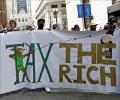
Taxing the rich will fetch nothing; only votes, argues Debashis Basu.
Here are some of the things that we could expect form the Budget 2010 on personal income tax. . .
Here are some of the things that we could expect form the Budget 2010 on personal income tax. . .
India's gross tax revenue, comprising both direct and indirect taxes between April and July, reported a growth rate of merely 2.8 per cent to Rs 8.9 trillion compared to the same period a year ago, as shown by government data on Thursday. This growth was dampened by direct tax figures, offsetting the healthy growth in goods and services tax collections and Customs duties. While net tax revenue contracted by 12.6 per cent to Rs 5.8 trillion up to July, accounting for 25 per cent of the Rs 23.3 trillion full-year target, this could be attributed to the increased tax devolution to states during the period.
 © 2026 Rediff.com - Advertise with us - Disclaimer - Privacy Policy - Sitemap - Feedback - About us - Terms of use - Grievances